EXO-1 · Gen-1 · Shipping now
The first vector,
ready to deliver.
EXO-1, our first deployable vector: engineered exosomes in an intranasal formulation. Nature's nanocarrier — isolated, loaded, and routed across the nasal mucosa. The proof the platform works, made real.
Low
Immune flag
Multi-organ
Targetable
RNA · protein
Cargo
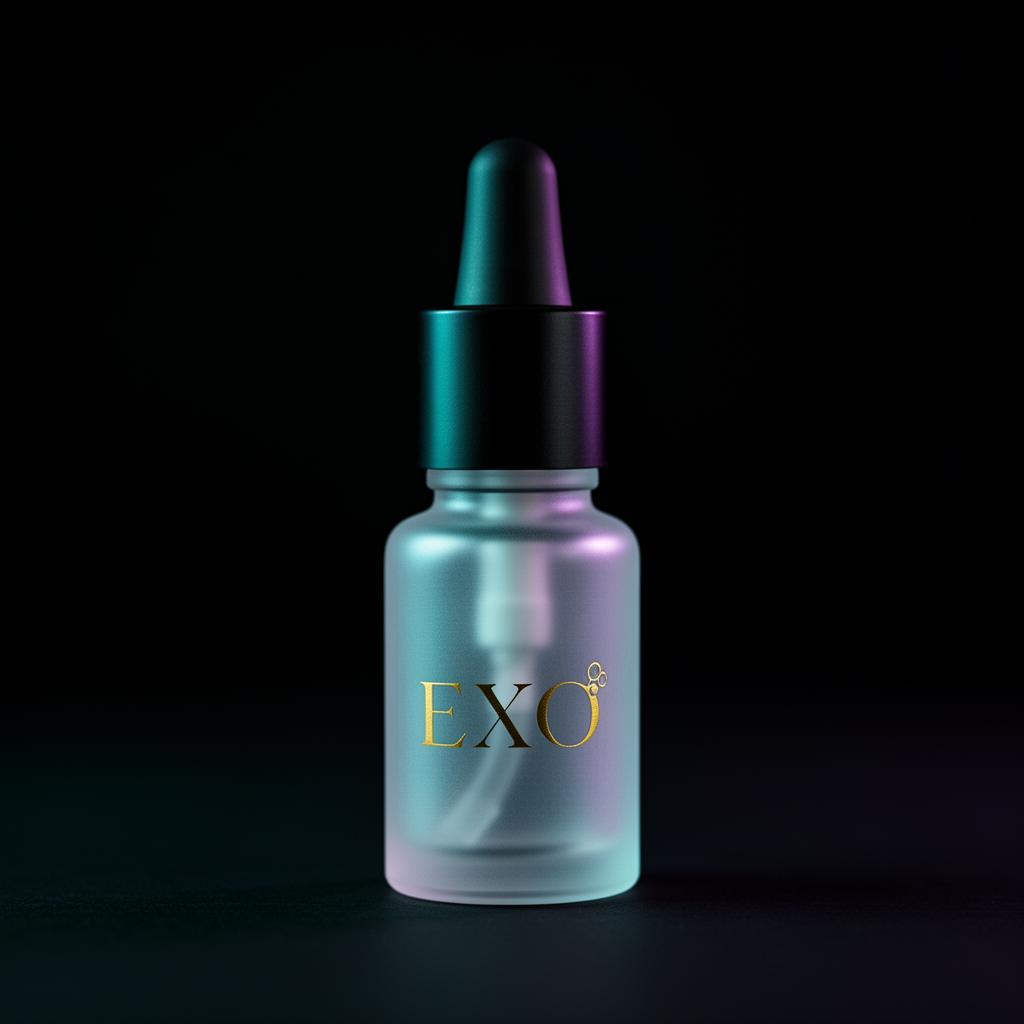
Lead product · intranasal formulation
Route · Intranasal → CNS
Across the nasal mucosa. Into the brain.
Olfactory and trigeminal pathways carry exosomes past the blood-brain barrier — a non-invasive route to the CNS.

Olfactory transportTrigeminal routeBBB bypassCNS bioavailable
Biodistribution · n=24 mice · 6h post-dose
Neural uptake, measured.
% injected dose per gram tissue · EXO-1 vs unmodified MSC-exo
Olfactory bulb14.2%ctrl 1.1%
Cortex9.6%ctrl 0.8%
Hippocampus11.4%ctrl 0.7%
Striatum7.8%ctrl 0.6%
Liver (off-tgt)2.1%ctrl 18.3%
Spleen (off-tgt)1.4%ctrl 9.7%
EXO-1 (intranasal)Unmodified (IV)
12.7×
vs IV control · cortex
84%
BBB transit · 90 min
−88%
Off-target liver
6.8:1
Olfactory bulb / liver
Functional readout · aged mice (18 mo) · 28-day dosing
Boosted neurogenesis. Cleared senescence.
Neurogenesis · DCX+ / Ki67+ in dentate gyrus
+218%
vs vehicle · p < 0.001
D0D7D14D21D28D35
3.1×
BDNF
2.4×
NeuN+ cells
+41%
Spine density
Anti-senescence · p16+ / β-gal+ in hippocampus
−72%
senescent-cell burden · p < 0.001
p16^INK4aveh 100exo 31
p21^CIP1veh 100exo 28
β-galactosidase+veh 100exo 24
SASP (IL-6)veh 100exo 36
SASP (TNF-α)veh 100exo 42
Cargo: synthetic miR-302/367 mimic + senolytic siRNA cocktail. Single intranasal dose, repeated weekly × 4.